
Let's Start Eventmaxxing
Why Not Organize a PowerPoint Night?

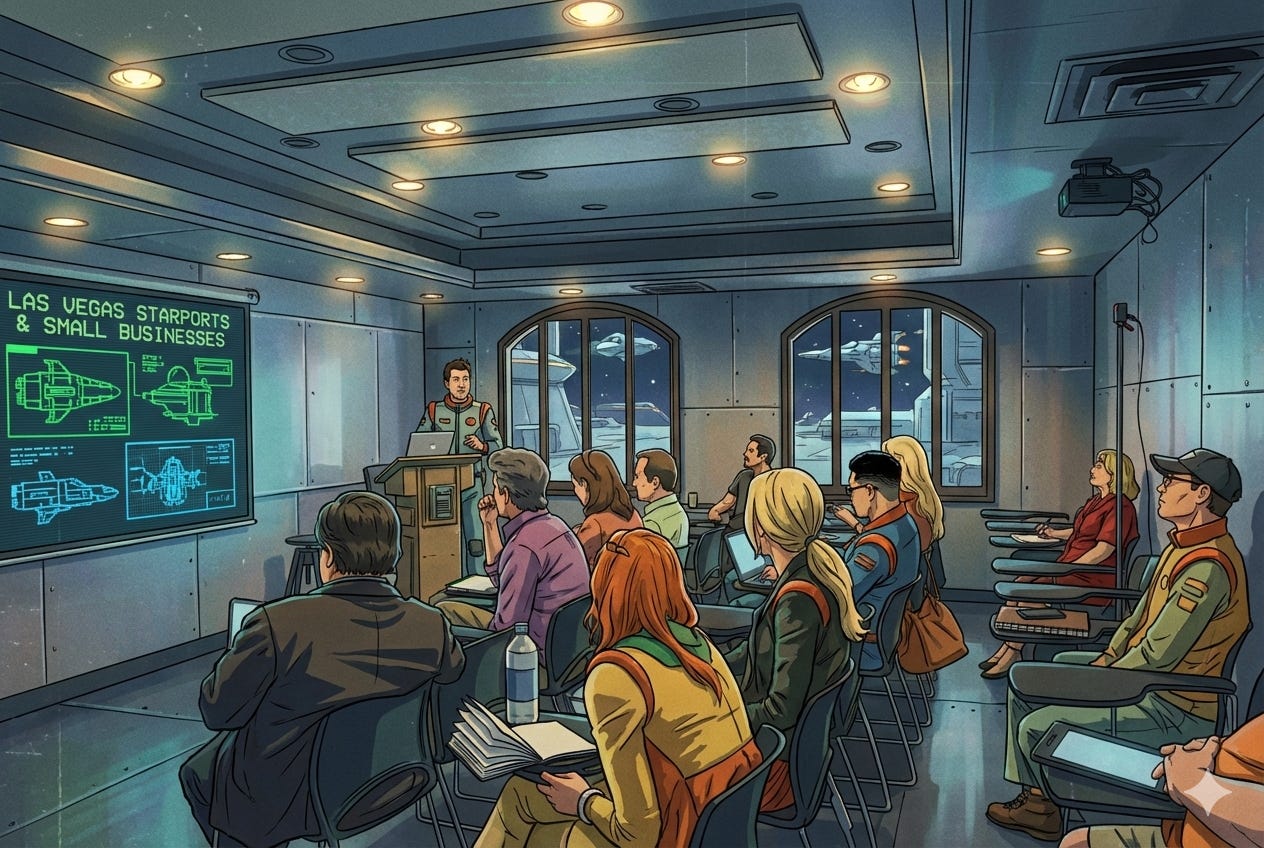
We should organize more events. You should try organizing some if you are not doing it already.
By events I mean most things that fall under “a planned public or social occasion” which might include a dinner party, a wedding, a retreat, a hackathon, or a conference. Protests would count as well. So would a bootcamp.
My first EA Global in London was an experience that made me realize how good a conference can be. It made me want to go back and have another shot at organizing an insurance conference I helped run as a student. The idea was to simply copy as much as I could from EAG and that would make even a finance-related professional event a pleasant experience for all the participants.
Since then, a few EAG(x) conferences later, I came to a conclusion that well-run events are too rare in our lives and that there should be more of them. Events add real value, most are still mediocre, and it's now easier than ever to run one yourself.
The benefits
Making connections
Aside from school and work there are not many places where you can meet someone new. Even if you happen to find yourself in such places, it’s hard to make connections, unless you are a master networker. (If you ARE one, then please, take me on as your apprentice.)
Events put you in the same time and place with a group of people. That group might be people you already know very well, but often it’s not. Additionally, events usually have a reason or a theme to it, that makes the people share at least one thing in common, like “knowing the newlyweds” or “being a fan of Joe Hisaishi’s music” or “being weird/open enough to come to this weird thing”.
An aside on networking itself: I’m assuming here that you understand the value of new connections and how each one carries the risk of being life-changing (e.g meeting your future mentor, spouse, co-worker, or co-founder). I know it’s hard to meet new people, and that of those you already know many get on your nerves, but please don’t rationalize it in a way that makes the conclusion “it’s not worth it”.
For events with many people who don’t know each other (like conferences), it’s good to have some mechanisms that reduce friction: an introduction round, a folder with participants’ profiles (with some interesting personal trivia, not links to LinkedIn profile), an app for booking 1-on-1 meetings, or, at the very least, name badges.
Catching up
Even if you already know someone, but only from online interactions or only in professional context, meeting them in another context and sharing some non-routine experience will move the relationship to the next level.
Even if you already established that kind of connection with someone, it’s hard to make time to see them, especially after turning 30. What if you could see your work friends and your childhood friends and your school friends all at once instead of scheduling several different dates? Throw a party! Bonus: if they like you, they might like each other as well.
Slowing down time
Events are an occasion to break away from the routine. Unless it’s a weekly meetup on the same topic, they allow you to land in different context and experience something novel.
There is a popular theory that says that time flies by much slower the higher the concentration of the novel experiences per day of your life. This includes visiting new restaurants or checking out new hobbies, but also doing a PowerPoint Night.
Even if the elements in itself are not novel, their combination can be unusual. Yes, you have been to this place before, met these people already, ate this kind of food, and tried this activity. But doing it all together?
There’s some synergy likely to happen, when the food tastes better in good company, and the activities make the connection better.
Events often are a good excuse to allow yourself some luxury and dial everything up to 11 - how you are dressed, how good is the food, how loud is the music, how festive is the venue, how professional are the photos taken etc.
Increasing area for serendipity
Both new connections and exposure to new experiences increase your area for serendipity. That means you are helping your luck, by learning and doing things that are likely to come in handy in your future life. If you believe that luck is a significant factor in one’s success, then you should know that being “in the right place at the right time” starts with going to places at a scheduled time.
There’s room for more (and better)
Done right, events can be a tremendous source of inspiration, learning and connection. Done wrong, they can be soul-crushing.
Misha Glouberman, events consultant.
Most events fall into the second category though the bar is lower than you think: it’s not about huge budget, it’s more like “manage expectations” and “don’t forget bread.”
Small touches matter: a dress code, theme-relevant bingo cards, name badges with interesting trivia instead of job titles.
You can find your angle in three ways:
Do existing things better — Your well-run small event pulls people away from the boring industry conference nearby. That’s a signal.
Adapt for underserved groups — Many people would attend existing events “but X stops them”. X might be: wrong time, wrong place, high cost, big crowd, theme being not specific enough. Solve for X. For example: “Za starzy na techno” (lit. “too old for techno”) runs daytime raves for people who won’t/can’t stay up until 3am.
Serve empty niches — Whole industries lack conferences. Hobbyist groups aren’t meeting. A martial arts convention in your city? Why not?
And the timing is right. My hot take: online content is increasingly competing with AI-generated material that’s orders of magnitude cheaper to produce. The average reader can’t tell how much work has been put into your or your brand’s online content and is drowning in remixes of remixes, summaries of summaries. You might escape to video or podcasts, but AI will soon come for those too and you’re also training your replacement.
The real escape, in my opinion, is further: into live, interactive, physical. Events are still something AI can’t make cheap copies of yet.
It’s time to be agentic
The more I thought about it the clearer it became for me: organizing events is a superpower. It’s a bundle of transferable skills: project management, risk management, communications, design, marketing, fundraising. All of them exercised in one high (social) stakes package. Every event you run will make you at least a bit better at all of them.
It’s also an agency muscle. High agency means realizing you can “just do things” and actually doing them. Richard D. Bartlett, who runs many community events, suggests using hosting capacity as a self-assessment of agency:

You may feel too incompetent to start. I feel so too. But we’re not. It’s like with pancakes: the first one will be messy. But let’s do it anyway.
And now, AI tools lower the barrier further. Use them to brainstorm ideas, find venues, estimate costs, draft communications, and manage checklists. Ask if you’re missing something to identify risks when stakes are a bit higher. You have a team of capable interns at your fingertips, so use them to create something real.
How to start?
Organize something with that’s “a bit weirder than just grabbing a beer together” with people you know. Maybe propose an unusual get-together with your coworkers or invite your friends to a dinner party “with a twist”? Find something you already enjoy and see how you can turn that into an event for a small group of people.
PS. I’m eager to learn what are some of the best/most original events that you have participated in and what made them special.
I am not a LARP enthusiast but I know some and they tend to be pretty good at organising weird events. I once got invited to a murder mystery dinner by a group of them and it was really fun.
In terms of hosting an event, I feel like running a D&D campaign is my ceiling at the moment, but I do believe it’s a really fun stuff to do if executed well. You can enjoy your time with friends, occasionally meet new people, and you are training your improv and creativity skills. Worldbuilding is quite a niche, solo and introvert-type hobby, but with D&D it can transform into an epic and extrovert activity, generating fantastic memories for the whole group.
As for events I attended, I think entering a Neuroshima Hex regional competition was that kind of thing, and if I attended those regularly, I’m sure I’d meet some great new people; I should try that again someday and encourage others to do it as well :)